
Blog
MRCI has entered a new partnership with NGB-Genetics. It marks a major step forward in our work to protect Madagascar’s wildlife.
The agreement pairs MRCI’s fourteen years of field experience with NGB-Genetics’ science and technology. Together we can track wildlife in this region far more closely than before.
MRCI has worked in the Nosy Be and Nosy Komba region for years. We work alongside local villages, government bodies and universities to protect both land and sea. This partnership adds new tools, and new scientific rigour, to that work.
This partnership is about more than equipment — it is about building the scientific infrastructure Madagascar’s wildlife needs to survive and thrive for generations to come.
State-of-the-Art Equipment, Funded by NGB-Genetics
One of the most exciting and immediate outcomes of this partnership is the generous in-kind contribution of field monitoring equipment from NGB-Genetics. This hardware will dramatically expand our capacity to observe and document wildlife across key sites including Ampohana, Lokobe, and Nosy Komba.
Equipment Provided by NGB-Genetics
15 Bushnell Prime L200 Camera Traps
Low-glow trail cameras, supplied with SD cards. They watch our priority forest sites around the clock, and log mammal and reptile activity with nobody present.
They matter most for shy species. One is Phaner parienti, the Nosy Be fork-marked lemur.
6 AudioMoth 1.2.0 Acoustic Recorders
Full-spectrum sound recorders, supplied with waterproof cases and SD cards. They pick up bats, birds and other wildlife by the sounds they make — day or night, wet or dry.
Together, the two sets of gear change what we can survey. Camera traps show which species are there, how they behave and when they are active, and they do it without disturbing them. The AudioMoth units add a whole new layer: what we can hear. Both run on their own, in places that were once slow and costly to survey.
All of this gear is funded and provided by NGB-Genetics. We are grateful for their support, and for their trust in our field teams.
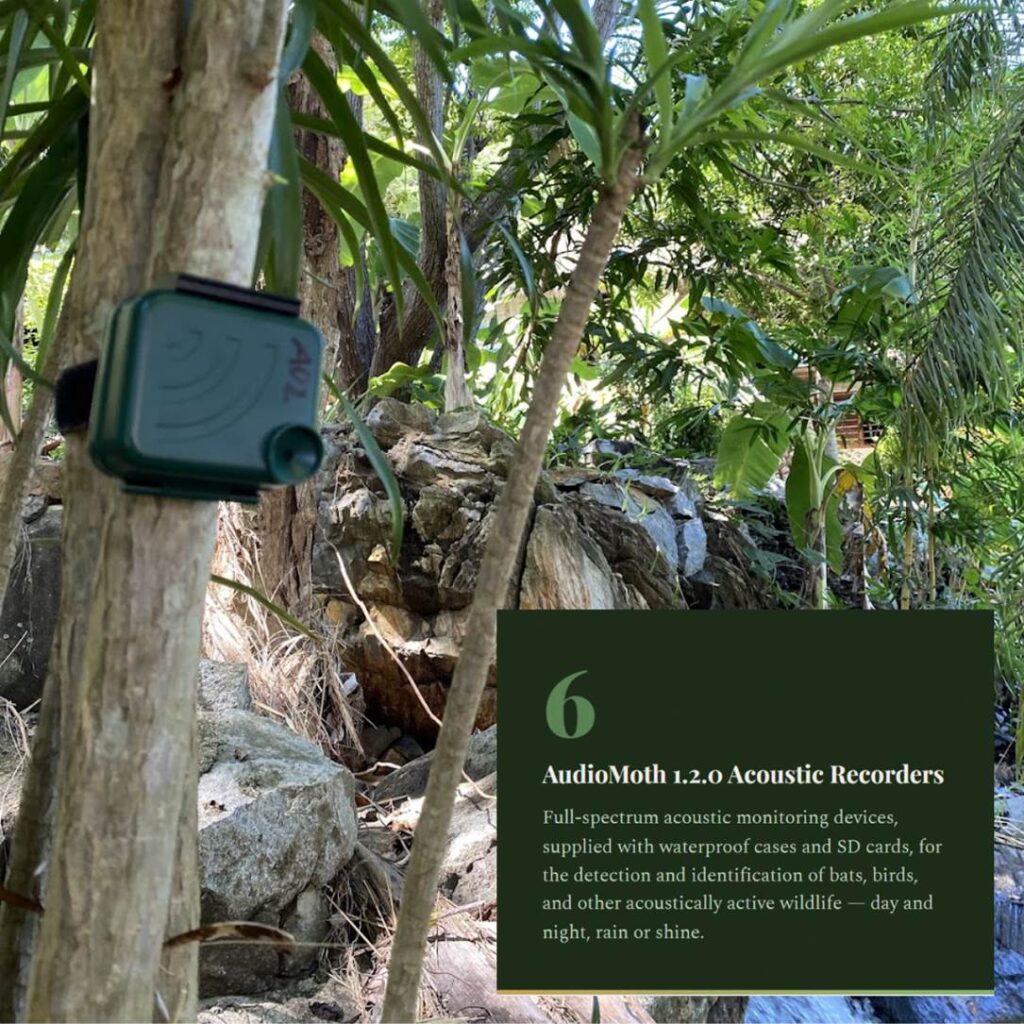
These devices represent a transformational upgrade to our field monitoring capabilities. Camera traps allow us to document species presence, behaviour, and activity patterns without disturbance, while the AudioMoth units open up an entirely new dimension of biodiversity monitoring through passive acoustic recording. Together, they will generate a rich, continuous stream of wildlife data from habitats that have historically been difficult and resource-intensive to survey.
All equipment is funded and provided by NGB-Genetics as an in-kind contribution to the partnership — a commitment that reflects their genuine investment in the future of Malagasy biodiversity. We are deeply grateful for their generosity and confidence in MRCI’s field operations.
Introducing Biodiverser: Our New Data Hub
NGB-Genetics has also given MRCI an institutional licence for Biodiverser. The platform stores wildlife data, holds it all to one standard, and publishes it for the world to use.
Everything will flow into it: our camera traps, sound recorders, field surveys and DNA samples. The result is one record of Madagascar’s wildlife, open to search and open to share.
This changes how MRCI handles its science. We can bring years of past field data together with the new, hold it all to the same standards, and prepare it for the Global Biodiversity Information Facility (GBIF). Our findings then reach the global record, where researchers, conservationists and policy makers can use them.
Both MRCI and NGB-Genetics hold admin access to the processed data. That keeps the work open on both sides. Sensitive details, such as exact sites of threatened species, follow GBIF’s own rules on sensitive data.

What This Means for Madagascar
Northwestern Madagascar is one of the most biodiverse and threatened regions on Earth. The forests, coastlines, and marine habitats of Nosy Be, Nosy Komba, and the surrounding islands are home to species found nowhere else — yet they face mounting pressures from habitat loss, climate change, and extractive industries. Robust, high-quality biodiversity data is not a luxury in this context: it is the foundation upon which effective conservation decisions are made.
With NGB-Genetics’ support, MRCI is now better equipped than ever to generate that data, share it openly, and use it to advocate for the protection of Madagascar’s natural heritage. Alongside the equipment and platform access, NGB-Genetics will also provide expert guidance on non-invasive DNA sampling protocols, opening the door to future environmental DNA (eDNA) and barcoding projects that could further revolutionise how we study and monitor wildlife in the region.
This is just the beginning. We look forward to sharing updates from the field as our new cameras and acoustic recorders are deployed, and as the first datasets begin flowing through Biodiverser. Madagascar’s forests have stories to tell — and now we have the tools to listen.

ABOUT MRCI
The Madagascar Research and Conservation Institute (MRCI) is a registered NGO. We have worked in the Nosy Be and Nosy Komba region for fourteen years. Our programmes cover sea and forest protection, wildlife surveys, school teaching and village work.
ABOUT NGB-GENETICS
NGB-Genetics is a life-sciences company providing molecular genomics tools and field technology to conservation organisations worldwide. Through the Biodiverser platform and direct scientific partnerships, NGB-Genetics supports open-access biodiversity data for global conservation science.
AboutMadagascar Volunteer
Madagascar Volunteer is the team behind this website. Our writers and reviewers have all worked on the ground here, on our own programmes and in the villages we support. We aim to give you clear, current facts, so you know what a placement involves and can plan your trip with care. Every article is checked before it goes live. We believe in volunteering the right way: good for the people we work with, good for the wildlife, and good for you.