Forest Conservation Volunteer Program
The Forest Conservation Volunteer Program in Madagascar is a hands-on environmental volunteering programme run by the Madagascar Research and Conservation Institute (MRCI) on Nosy Komba and in Lokobe Forest Reserve. Volunteers support the protection of the Sambirano forests through biodiversity surveys, wildlife monitoring, reforestation, habitat restoration, invasive plant removal, nursery work, sapling planting and non-invasive bat research. The programme helps preserve threatened forest ecosystems, native wildlife and plant species while contributing to structured conservation data collection and community-led environmental awareness. Volunteers stay at MRCI’s Turtle Cove camp on Nosy Komba and may join guided hikes, overnight forest campouts and conservation fieldwork in Lokobe Forest Reserve. No prior conservation experience is required, but moderate fitness is needed. The programme runs year-round for 1 to 12 weeks, with 2026 costs starting from $720. Volunteers receive a certificate after completion.
What is MRCI's Forest Conservation Volunteer Program?
MRCI’s Forest Conservation Volunteer Program is designed for volunteers who want practical field experience in one of Madagascar’s important forest ecosystems. Based on Nosy Komba, known as Lemur Island, the programme combines scientific research, habitat restoration and community-supported conservation. Volunteers work alongside the MRCI conservation team to collect biodiversity data, restore degraded habitats and support long-term protection of the Sambirano forests in Northwest Madagascar.
Forest Conservation Program at a Glance
| Program Feature | Details |
| Location | Nosy Komba & Lokobe Forest Reserve, Madagascar |
| Primary Activities | Wildlife Monitoring, Biodiversity Surveys, Reforestation, Habitat Restoration & Bat Research |
| Program Requirements | Moderate Fitness Level Required for Forest Hikes & Fieldwork |
| Minimum Stay | 1 Week |
| Starting Price | From $720.00 |
| Conservation Impact | Forest Restoration, Reforestation, Wildlife Conservation & Biodiversity Research |
Forest Conservation Volunteer Program Costs
2026 Costs for Forest Conservation Volunteering
- 1 Week - $720.00
- 2 Weeks - $995.00
- 3 Weeks - $1,270.00
- 4 Weeks - $1,545.00
- 5 Weeks - $1,820.00
- 6 Weeks - $2,095.00
- 7 Weeks - $2,370.00
- 8 Weeks - $2,645.00
- 9 Weeks - $2,920.00
- 10 Weeks - $3,195.00
- 11 Weeks - $3,470.00
- 12 Weeks - $3,745.00
What Your Program Costs Cover
- Accommodation: Stay at MRCI’s Turtle Cove camp on Nosy Komba, with additional overnight campouts and guided expeditions in Nosy Komba and Lokobe Forest Reserve. Accommodation is simple, community-supported, and located close to key conservation sites.
- Three Meals Per Day: Program fees include meals throughout your stay, helping keep volunteers energized during fieldwork and conservation activities.
- Transportation & Transfers: Program fees cover transportation and transfers associated with your volunteer placement and conservation activities.
- Field Research & Conservation Activities: Participate in biodiversity surveys, wildlife monitoring, habitat restoration, invasive species removal, nursery work, and reforestation projects alongside the MRCI conservation team.
- Equipment & Project Resources: All essential equipment and resources required for conservation activities, research projects, and habitat restoration work are included.
- Guided Forest Expeditions: Join guided hikes, overnight wildlife monitoring excursions, biodiversity surveys, and conservation fieldwork in both Nosy Komba and Lokobe Forest Reserve.
- Direct Conservation Impact: Your program fees directly support forest restoration, wildlife research, conservation initiatives, camp maintenance, and community development projects that help protect Madagascar’s unique ecosystems.
What is the Purpose of a Forest Conservation Program?
The Sambirano forests are part of a unique and delicate ecosystem. Therefore, this program supports long-term preservation by combining field research, habitat restoration, and sustainable community collaboration. The goal is to help protect biodiversity while building environmental awareness and shared responsibility.
The forest conservation program works to:
- Support the protection of native wildlife and plant species
- Restore habitats through nursery development and sapling planting
- Study and monitor biodiversity through structured field research
- Reduce invasive plant species that disrupt natural growth patterns
- Strengthen environmental awareness through community engagement
- Conduct non-invasive bat surveying to document nocturnal activity patterns and diversity
Who the Forest Conservation Program is Ideal For:
- Individuals passionate about forest conservation and biodiversity
- Volunteers seeking hands-on experience in environmental volunteering, research, and sustainable practices
- Nature lovers eager to experience Madagascar’s unique flora and fauna
- Adventurous travelers comfortable with basic accommodation and physical activity
- Students and graduates aiming to develop practical skills in fieldwork and forest conservation
Why Choose Our Forest Conservation Program?
As a forest volunteer, you’ll directly contribute to preserving the unique Sambirano forests and endemic wildlife. In addition, this program offers an extraordinary opportunity to:
- Directly contribute to preserving the unique Sambirano forests and endemic wildlife as a forest conservation volunteer.
- Experience one of the most bio-diverse regions on Earth with expert local guidance
- Opportunity to work on scientific research and make a tangible conservation impact
- Engage with local communities and support sustainable development
- Gain practical skills in field research, species identification, data collection, and ecosystem management
- Enjoy a truly immersive adventure, cultural exchange, and personal growth experience
- Participate in the first-ever acoustic survey of bats on Nosy Komba to help protect endemic species
Forest Conservation Program Details
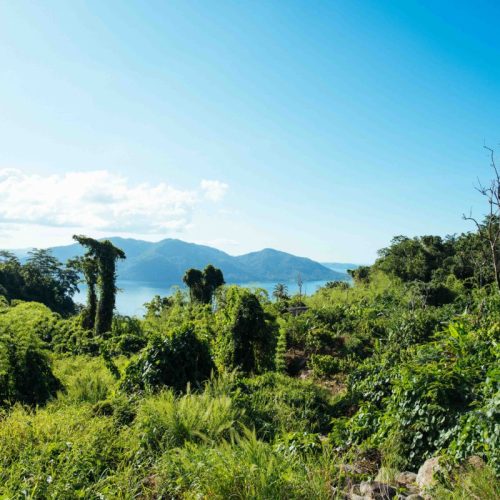
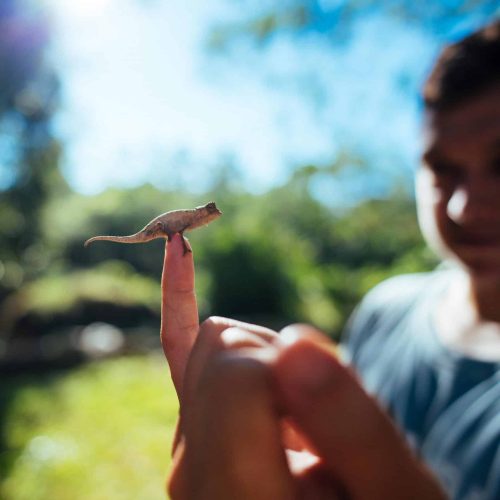
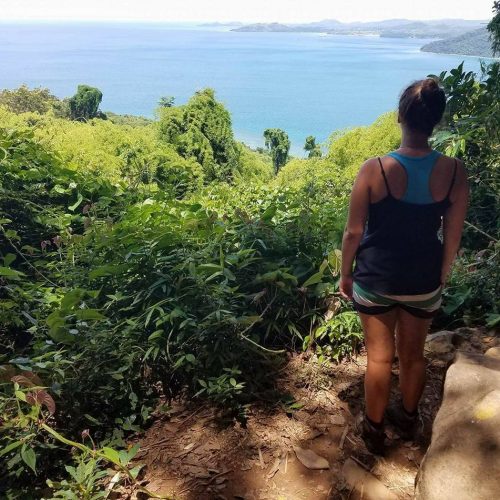
The MRCI Forest Conservation Program on Nosy Komba, known as ‘Lemur Island,’ focuses on preserving the threatened Sambirano forests in Northwest Madagascar through active restoration and sustainable practices. As part of this environmental volunteering initiative, you’ll play a key role in supporting long-term forest conservation goals
Key project features include:
- Daily hikes to survey diverse biodiversity, including reptiles, amphibians, birds, and lemurs
- Acoustic monitoring of bats to identify cryptic species and build a local reference library of echolocation calls
- Data collection that directly informs conservation efforts
- Activities like alien plant removal, seed collection, composting, nursery work, and sapling planting
- Overnight night hikes providing opportunities to observe and record nocturnal wildlife
- Collaboration with the National Parks Department for population assessments and ongoing research
- Regular overnight guided walks and campouts in both Nosy Komba and Lokobe Forest Reserve
Accommodation
Accommodation for our forest conservation program volunteers is simple, community-supported, and located close to the key restoration sites.
Forest conservation volunteers stay at MRCI’s Turtle Cove camp on Nosy Komba, an island with no roads and challenging forest paths, thus moderate physical fitness is required.
Every alternate week, volunteers explore the forest on Nosy Komba through various walks and overnight campouts at either the Church or Baobab. Accommodation remains very basic and the cost is included in the forest conservation program fee, benefiting the local community.
Volunteers conduct fortnightly overnight guided walks in Lokobe Reserve. Accommodation is basic, with tented beach camps on the forest edge. Meals are arranged on-site through a local restaurant to support the community. Volunteers can upgrade at an additional personal cost to private tents with mattresses or private bungalows, subject to availability, arranged with the local community leader on-site.
Volunteer Activities and Impact
These activities form the core of our forest conservation program and ensure volunteers make a measurable impact.
As a forest conservation volunteer, you’ll participate in meaningful environmental volunteering tasks such as:
- Forest biodiversity surveys
- Alien/invasive plant removal
- Seed collection and nursery support
- Sapling planting and habitat restoration
- Overnight monitoring of nocturnal species
- Supporting community conservation efforts through data-sharing
Developing a species ID kit for under-studied mammal groups through bat research
These activities are essential components of the forest conservation program and contribute directly to long-term environmental protection.
Additional Activities for Forest Conservation Volunteers
For adventurous volunteers, we offer additional optional off-program excursions to the Ankarana Forest Reserve near Diego Suarez. Costs vary based on the number of participants and include transportation, guides, and accommodation. Ensure safety and standards when considering other operators offering lower prices. These optional excursions provide even deeper exposure to Madagascar’s biodiversity and complement the core forest conservation program.
Forest Conservation Volunteer Reviews
Dominic White
VOLUNTEER“I have been on the forest conservation program in Nosy Komba for twelve weeks now and I have enjoyed every moment. The typical week on project involves a bird survey or reptile transect on Monday and Tuesday.”
Aren Ammari
VOLUNTEER“Whether you are travelling abroad for your gap year or wish to enjoy an eco tour holiday adventure, volunteering in Madagascar is a once in a lifetime opportunity not to be missed.”
Julia
VOLUNTEER“I’ve found amazing wildlife, beautiful jungle and I’ve really loved my job. It was amazing to improve the forest project here and to study lemurs in a scientific way and, as the logistics here allowed us.”
Adam
VOLUNTEER“What a fantastic experience, I volunteered for eight weeks in the Forest Programme followed by eight weeks in the Marine Programme. The Forest Programme was a wonderful insight into how rewarding conservation can be It’s very hard to pick just one favourite moment but hiking through sub-tropical rainforest to find wildlife every day was something I’ll never forget. The Forest Team was beyond dedicated, forging relationships and earning the trust and respect of the locals which is vital to any conservation programme.”
Elitsa Penkova
VOLUNTEER“Being part of the forest conservation project on Nosy Komba has allowed me to experience and appreciate some of Madagascar’s tremendous biodiversity. It is incredible – despite its relatively small size, the country holds 5% of the world’s species. What amazes me the most though, is the way Evolution has carved life forms in bizarre and marvellous shapes and colours”
Kathy Netherclift
VOLUNTEERMy husband and I have just had 3 weeks of volunteering here and it is truly paradise. The location, the amazing team of staff members, local guides and fun fellow volunteers. We enjoyed turtle monitoring by land and snorkeling to identify and observe Green and Hawksbill turtles, I also enjoyed exploring Nosy Komba doing Forestry Conservation looking for Herpetofauna (reptiles and amphibians). Perfect location for the unique creatures Madagascar has to offer, chameleons, lemurs… you get to do great night hikes to view nocturnal animals.
Darren taught English and swimming to the locals in the spare time, they offer many volunteering options, so best Volunteering experience I’ve had and I’ve had many! I recommend at least 3 weeks as there are so many fun trips on your weekends off!
Read more here
Eddy Watling-Read
VOLUNTEERThe forestry program is awesome. You see and learn about lots of wildlife, and plant trees and more. The best part is the weekly night walk which is exciting and adventurous. The camp is really fun and everyone is super friendly.
Isabelle Hartmond
VOLUNTEERThe marine program was just as awesome. Diving everyday was a dream come true, especially on the beautiful reef right off the beach of camp. There are so many fish, coral, and reef creatures and being able to explore that reef, as well as learn the creatures on it (active swimmers for me) was amazing. Doing nudi surveys, baseline surveys, as well as getting my advanced open water certification here was so much fun and so easy to do.
The staff for both programs are super supportive as well and are a large part of the reason I enjoyed my time so much. I would definitely recommend either of these programs for anyone interested in nature, whether it is on land or in the sea, both forest and marine give you the satisfaction of seeing it all!
Read more here
Elal
VOLUNTEERBefore this program most of my knowledge of the place came from the rather inaccurate movie Madagascar. The lemurs I had the opportunity to work with did not sing but oinked not unlike a pig. Obviously they didn't talk either. I loved them regardless. Despite it not being quite what I expected I enjoyed my trip in Madagascar. I learned the different species of frogs, skinks, snakes, birds, chameleons, and geckos present in the island of Nosy Komba. I got to conduct surveys on the wildlife present in order to aid forest conservation efforts. Not only did I feel that what I did was impactful but it was also extremely interesting and fun. The hikes through the incredible scenery, both beaches and forests, are experiences I shall never forget. The people, both staff and locals, were incredibly friendly and welcoming. Put simply, Madagascar is amazing and this program was a great way to get there and learn about Madagascar (the place not the movie).
Read more here
Anna Vindenes
VOLUNTEERI was volunteering in the forest project for 4 weeks and I thought it was amazing. During my time here I got to see wild lemurs, chameleons, and tons of snakes and geckoes. We would hike on Nosy Komba in the morning, these hikes are though, but they are also beautiful and I think it was absolutely worth every drop of sweat and mosquito bite. I started studying my species before I got here, and that really helped me when I got to camp. It is so much more fun when you know what you are spotting in the forest and you also feel like you are doing more of a difference.
The huts are basic, but that lets the ocean breeze in, which is nice on the warmer nights. The food is good and carb based. Most volunteers go to Hellville in Nosy Be on the weekends. From there you can go different islands, see the sacred waterfalls and do some shopping, and much more.
Read more here
Kristen
VOLUNTEERMy 10 weeks on the forest conservation project in Madagascar were full of hiking, wildlife, new friends, and beautiful scenery. The accommodations turned out to be better than I expected and I enjoyed spending weekends exploring other parts of Madagascar with other volunteers. You'll meet people from all over the world who share a similar passion for travel, volunteering, conservation, and community development. You'll have the opportunity to learn the local language, Malagasy, and to immerse yourself in Malagasy culture by talking with people, trying traditional Malagasy cuisine, and exploring the country. As one of the world's poorest countries, you'll see firsthand the effects of poverty on people's lives, but you'll also spend your days volunteering in ways that will improve people's lives, which can be very rewarding. In addition to the forest project, I also had the opportunity to teach English classes in the afternoons and to go on several construction trips to a rural village on the main island where MRCI volunteers are building a medical clinic for the village. It was rewarding to help in as many different ways as possible, and I made life-long friends from all over the world. I would highly recommend this program to anyone who is interested in conservation, community development, experiencing new cultures, or simply making a difference in someone's life.
Read more here
Emily Holloway
VOLUNTEERRead more here
Frequently Asked Questions
What is a forest conservation volunteer?
A forest conservation volunteer participates in hands-on activities to protect and restore Madagascar’s unique forests and wildlife. Volunteers engage in tasks like biodiversity surveys, invasive plant removal, sapling planting, and habitat restoration.
Who can join the forest conservation program?
The program welcomes anyone passionate about nature, conservation, and environmental volunteering.
Is this program suitable for students or gap year volunteers?
Yes. The program is ideal for students, graduates, and gap year participants seeking forest conservation volunteer experience and practical environmental skills.
Do I need prior experience in conservation?
No. Volunteers receive training on all tasks, including species identification, data collection, and habitat restoration. This makes it suitable for students, graduates, or anyone interested in practical conservation experience.
Do I need a visa to volunteer in Madagascar?
Yes. All international volunteers require a tourist visa. MRCI guides application procedures and extensions to ensure compliance.
What vaccinations should I have before traveling?
Madagascar does not require any vaccinations to enter the country. Commonly recommended vaccinations for Madagascar include Hepatitis A, Typhoid, and Tetanus. Malaria prevention medication is also advised. Always check with your doctor or a travel clinic before booking flights.
How long does the program last, and when can I start?
The program runs year-round with start dates on the first and third Monday of each month. You can choose to participate for 1 to 12 weeks, depending on your schedule
What should I bring with me?
Bring sturdy hiking shoes, light long-sleeved clothing, rain gear, insect repellent, reusable water bottles, and personal items for overnight forest campouts. Conservation tools and materials are provided on-site.
Where will I stay during the program?
Accommodation is at MRCI’s Turtle Cove camp on Nosy Komba in shared dorm-style bungalows. Overnight forest excursions involve tented camps near the forest edge. Meals are included.
What will my daily tasks involve?
Volunteers conduct biodiversity surveys, remove invasive plants, collect seeds, plant saplings, monitor nocturnal wildlife, and assist in community conservation projects.
How physically demanding is the program?
Fieldwork involves walking through forest trails, carrying equipment, and participating in overnight excursions. Volunteers should be prepared for moderate physical activity.
Apply Today
By joining our forest conservation program, you will make a meaningful impact while gaining valuable hands-on conservation experience.
Contact us today to learn more and take your first step toward making a lasting impact.