About Us
About MRCI
MRCI is dedicated to environmental conservation and community development in Madagascar. Since 2013, we have been bringing together diverse volunteers to make a positive impact through research, conservation, and community initiatives.
What Makes Us Different
Sustainable Research & Conservation
We actively engage in and contribute to sustainable research and conservation projects, with a deep commitment to safeguarding our planet's natural heritage.
Fostering Positive Impact
We provide a safe platform for volunteers from diverse backgrounds to unite in the pursuit of positive change for local communities and the environment.
Community Well-being Focus
We work closely with local communities to enhance their health and educational circumstances, ensuring they have access to essential resources and support.
Partnering for Progress
We collaborate with local NGOs and other conservation-focused organizations to help them achieve their goals and further their missions.
Years of
Foundation
passionate partners
incredible
volunteers
successful volunteer programs
Our Achievements
Over the years, MRCI’s volunteers, staff, and partners have made a measurable impact across Madagascar’s environment and communities. From marine and forest conservation to education and community development, our programs have delivered meaningful results, protecting biodiversity, supporting local schools, and improving living conditions.
2025 Achievements
Turtle Monitoring Program
- Protected over 170 turtle nests along Ampohana beaches, increasing hatchling survival rates for green and hawksbill turtles.
- Identified 116 individual turtles through Active Turtle Surveys and uploaded records to the Internet of Turtles database.
- Established permanent 50-metre seagrass transects across key monitoring sites, preparing data for submission to the Seagrass Watch database.
- Conducted regular in-water turtle surveys documenting movement patterns and habitat use.
Forest Conservation Program
- Conducted the first biodiversity survey on Nosy Kisimany, discovering a breeding pair of critically endangered Madagascar fish eagles.
- Recorded 82 bird species in Ampang and implemented a PostgreSQL + PostGIS database for long-term biodiversity monitoring.
- Expanded Lepidoptera research to 52 species through fruit-trap monitoring and identification programs.
- Added seven new herpetofauna species and 24 new bird species to MRCI biodiversity records through Lokobe National Park surveys.
- Developed and implemented a standardized Phaner parienti survey protocol for long-term monitoring.
Community Development Program
- Conducted the first biodiversity survey on Nosy Kisimany, discovering a breeding pair of critically endangered Madagascar fish eagles.
- Recorded 82 bird species in Ampang and implemented a PostgreSQL + PostGIS database for long-term biodiversity monitoring.
- Expanded Lepidoptera research to 52 species through fruit-trap monitoring and identification programs.
- Added seven new herpetofauna species and 24 new bird species to MRCI biodiversity records through Lokobe National Park surveys.
- Developed and implemented a standardized Phaner parienti survey protocol for long-term monitoring.
Marine Conservation Program
- Constructed and deployed 15 artificial reefs around Nosy Komba to increase habitat complexity and support marine biodiversity.
- Planted over 1,500 corals across coral nurseries and restoration sites.
- Conducted butterflyfish surveys to assess reef health using indicator species.
English Teaching Program
- Provided free education to 325 children each month, with 83 students enrolled at Ampohana school.
- Completed a solar power upgrade allowing students to study after dark and enabling evening classes.
- Created four new classes, trained two teaching interns, and donated 22 new exercise books.
2024 Achievements
Marine Conservation Partnerships
- MRCI formed new affiliations with Green Fins, PADI AWARE, and Ocean Conservancy.
- Green Fins initiatives promote environmentally responsible diving and snorkelling practices.
- PADI AWARE partnership enabled participation in global campaigns such as Dive Against Debris.
- Adopted the Clean Swell App to track and report marine debris collected during beach cleanups.
Research Partnerships
- Signed a new partnership agreement with CNRO (National Centre for Oceanographic Research) to survey artificial reefs and contribute biodiversity data.
Community Development
- Constructed a new ablution block at Ampohana school funded by the Help to Create Hope foundation.
- Built a second gravity-fed water well in Ampohana to improve access to clean water.
- Replaced the roof of the Ampohana clinic to ensure continued healthcare services.
Local Staff Development
- Raised funds to support staff member Solly in completing his PADI Instructor certification.
- Staff members Emile and Jean learned to swim for the first time.
- Artina and Sandrina began training toward becoming certified divers.
Education & Knowledge Exchange
- Hosted 30 Master's students from the School of Agricultural Sciences in Antananarivo for an agroforestry workshop.
- Volunteers delivered lectures to marine biology students at CNRO University.
Student Scholarships
- Launched a bursary program supporting local students pursuing higher education.
- Funding currently supports a nursing student and another student completing her high-school diploma.
Coral Reef Monitoring
- Launched the CoralWatch Project to monitor coral bleaching in Nosy Komba and surrounding reefs.
- Collected standardized coral health data to support reef restoration and conservation strategies.
Bird Monitoring
- Launched four new bird surveys across Nosy Komba and Nosy Be forests to track species populations and environmental changes.
Marine Conservation Projects
- Constructed and deployed three artificial reef domes near Nosy Komba.
- Volunteers participated in reef design, construction, and maintenance.
Environmental Impact Metrics
- Conducted 68 beach cleanups.
- Created 370 eco-bricks from collected plastic waste.
- Produced 1,290 bamboo straws distributed to local businesses as plastic alternatives.
Education Programs
- 321 students attended MRCI English language classes across Nosy Komba, Hell-Ville, and Ampohana.
2023 Achievements
Construction
- Completed construction of a school in the village of Ampohana.
- Renovated a daycare centre for intellectually disabled children on Nosy Be.
Marine Conservation
- Built and implemented an artificial reef structure populated with more than 200 coral fragments from four genera.
2019 Achievements
Construction
- Constructed a freshwater well in the village of Ampohana in partnership with Tim Kohlbecher and the Leo Club Charity.
2018 Achievements
Construction
- Completed the Ampohana Clinic construction project, with a grand opening attended by government officials and broadcast nationally.
2017 Achievements
Community Development
- Built toilets in Ampadinombe in exchange for 20,000 square meters of forest rehabilitation.
Marine Conservation
- Installed artificial reefs including “Mad-hatter”.
- Created the artificial reef known as “The Parking Lot” using submerged vehicles.
Forest Projects
- Established an agroforest in Ampasinomby.
- Initiated Lepidoptera surveys.
2016 Achievements
Community Development
- Built toilets in Ampadinombe in exchange for 20,000 square meters of forest rehabilitation.
2014 Achievements
marine conservation
- Installed artificial reef structures and collaborated with CNRO on a biodiversity survey opposing oil drilling in North Madagascar.
Our Partners


Apply Today
Ready to embark on your volunteer journey? Join us at MRCI, where together, we can discover, conserve, and transform Madagascar for the better.
Contact us today to learn more and take your first step toward making a lasting impact.
The Answers to All Your Questions
If you have further questions, please email us at volunteer@madagascarvolunteer.com
Accommodation
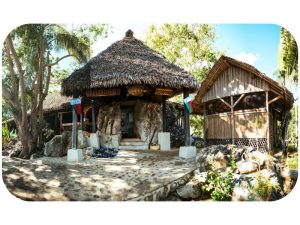
Volunteers are housed in communal eco-bungalows, locally built, and equipped with beds and solar-powered lighting. Each cabin accommodates 3 to 4 volunteers. Volunteers are required to bring their own bedding and mosquito net. Room service is not available.
Meals
Our onsite local cooks prepare three daily meals using fresh, locally grown ingredients in the traditional Malagasy style of cooking. All meals include rice and are usually accompanied with beans and a protein. Additional snacks and drinks can be purchased at the camp canteen.
Currency
The official currency in Madagascar is the Malagasy Ariary (MGA). There are ATMs in Hellville where volunteers can withdraw local currency. There is a bureau of exchange at the airport where U.S Dollars and Euros can be exchanged.
Passport & Visa
All visitors require visas, which can be obtained on arrival at the airport. A 14-day visa costs $11, a 30-day visa costs $37 and a 60-day visa costs $45. Visa extensions are available in-country for $75. Ensure your passport is valid for at least six months after your return date and has two blank pages available.
What to bring
Madagascar has a tropical warm climate so pack light. Casual clothing, sandals, walking shoes, sunblock, insect repellent, bath and beach towels, pillow and sheet, mosquito net, personal items, and diving equipment for marine program volunteers. Don't forget any required wetsuits, masks, fins, snorkels, underwater slate, diving torch, and waterproof or dive computer.
Health & Safety
While malaria is uncommon, we recommend necessary precautions. Drink bottled water in town, carry a personal first aid kit, and obtain travel insurance, including diving coverage.
Connectivity & Electricity
WiFi and internet access are available at some local restaurants and internet cafes in Hellville. Local cellular SIM cards can be easily purchased, providing ample reception throughout Nosy Be and Nosy Komba, including our camp.
Limited charging facilities are available on camp, so please minimize electronic equipment usage and consider bringing solar battery packs for personal devices.
Language
Malagasy is the official language, with French widely used in business and government. English is also widely spoken and is the official language at our camp.