
AchievementsBlogForest Conservation
Agroforest on Nosy Komba: Agreements Between MRCI and Malagasy Leaders Forge a Greener Future
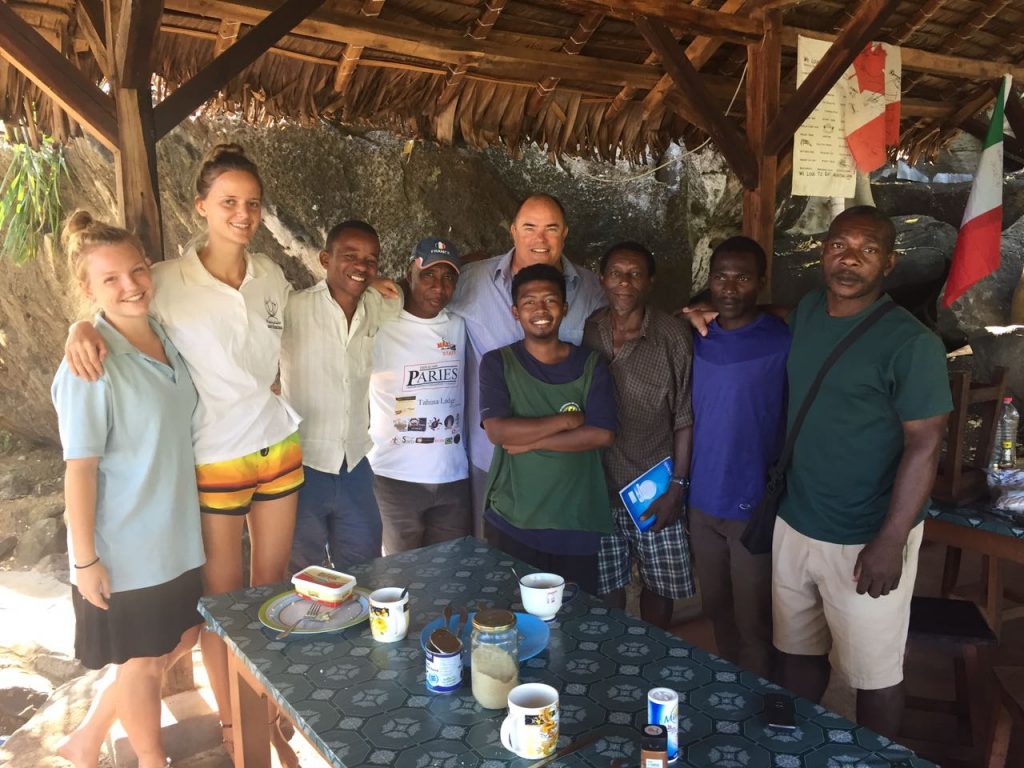
In a groundbreaking development, MRCI has concluded an agreement with the village of Ampasinomby to establish the first agroforest on Nosy Komba. As part of the agreement, MRCI will build toilets in Ampadinombe, and in return, they will receive 20,000 square meters of degraded forest to rehabilitate. This land will be used for phase one of our agroforest reforestation program on Nosy Komba. The meeting was attended by the Mayor of Nosy Komba, Mr. Raymond Pappa Komba; the President of Ampangorina, Mr. Jaofena; President of the Nosy Komba Forest, Mr. Edmond Bary; the President and representative of Ampasinomby Village, Mr. Joro Be; and MRCI representatives Lucy, Rojo, David, and Christina.
A First of Its Kind: Agroforest on Nosy Komba
Implementation of an agroforest on Nosy Komba is the first of its kind. With villages typically needing to clear forest vegetation to grow crops, MRCI is pioneering the concept of cultivating cash crops—such as coffee, vanilla, and chili—without destroying or interfering with valuable ecosystems. This initiative is combined with a sanitation program for the local village, creating a holistic approach to sustainable development.
Sustainable Agriculture and Reforestation Combined
MRCI is currently developing an agroforestry project that meets the agricultural demands of the local community while maintaining a sustainable and healthy forest for Nosy Komba’s wildlife. By working closely with local communities, MRCI aims to provide long-term employment, educate residents about the benefits of healthy forests, and demonstrate the coexistence of profitable agriculture with diverse forest ecosystems.
Bringing Clean Water and Sanitation to Ampasinomby
Ampasinomby, a coastal village of approximately 200 people, has lived for generations without running water or sanitation. With the assistance of MRCI and its volunteers, this village will now have access to flushing toilets and running showers. A similar project was recently completed in Be Village, where two toilet units and two shower units were built. The project includes constructing a water catchment area in the mountains, piping the water to a tank above the village, and supplying the toilet and shower units from this tank. Sanitation is managed through a septic tank system.